"Welcome to our performance."
"Please take a moment to turn on your devices."
Every screen in this room is a doorway. Every phone, a candle. Every face on every feed, another seat in a theater that just got bigger than the building.
We came here for a show. What we are actually doing is summoning a planetary family, using the same technology that was used against us to find each other instead. To weave solutions ourselves. To prove that change doesn't trickle down from institutions; it rises up from rooms like this.
The lights stay low. The screens stay lit.
Live. Emergent. Unrepeatable.
The only live event that is simultaneously a solo show, a social network, a fundraiser, and crowd creation. And feels like none of those things.
Most fundraisers ask you to give.
Most shows ask you to watch.
Most social networks ask you to scroll.
This asks you to show up, and then does something with everything you brought.
Here's what actually happens in the roomScene I
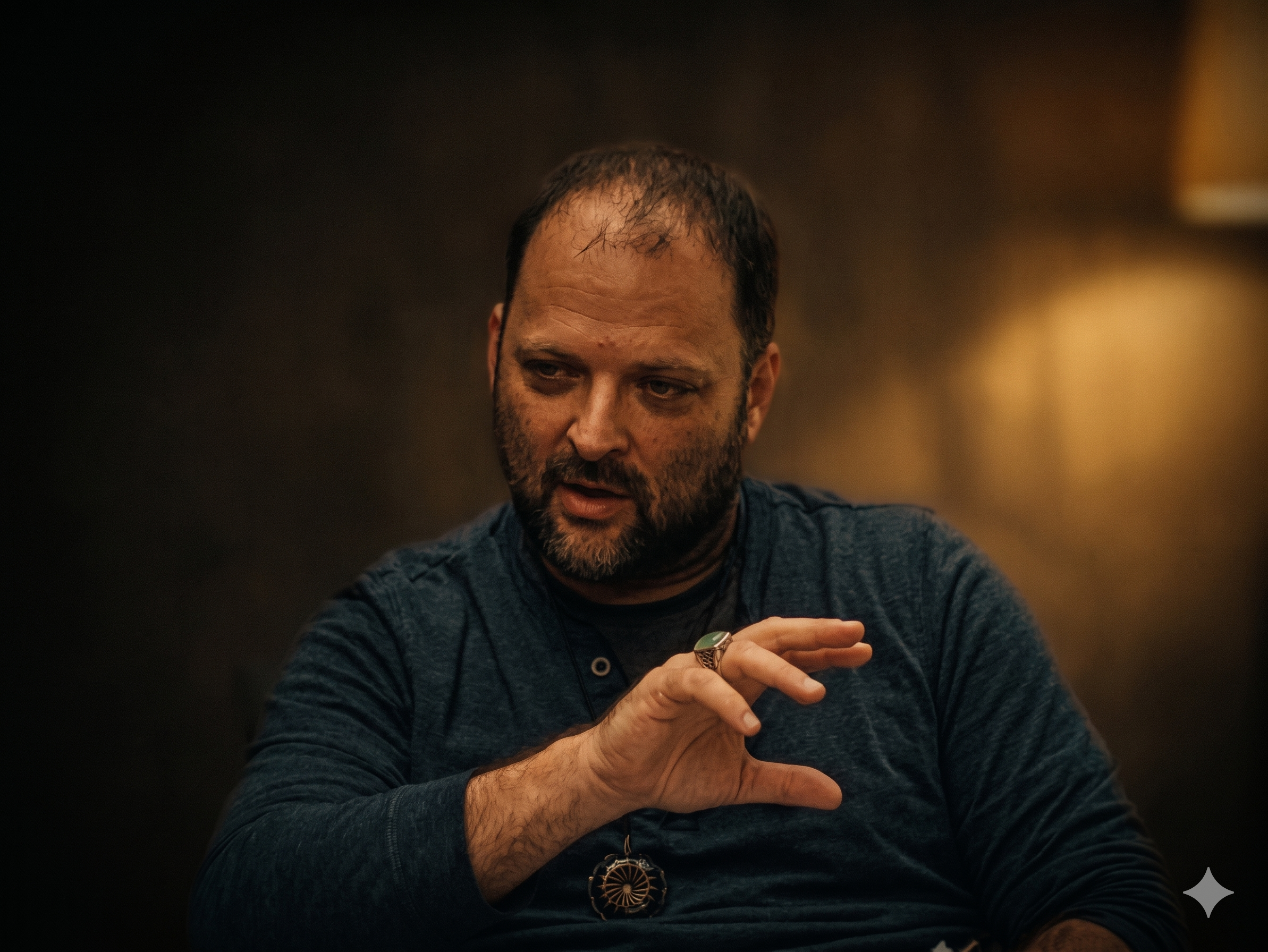
The performer walks out and shares something real. Something from his own life. The kind of thing people usually keep private. The room shifts. Trust enters. And then the room begins to open.
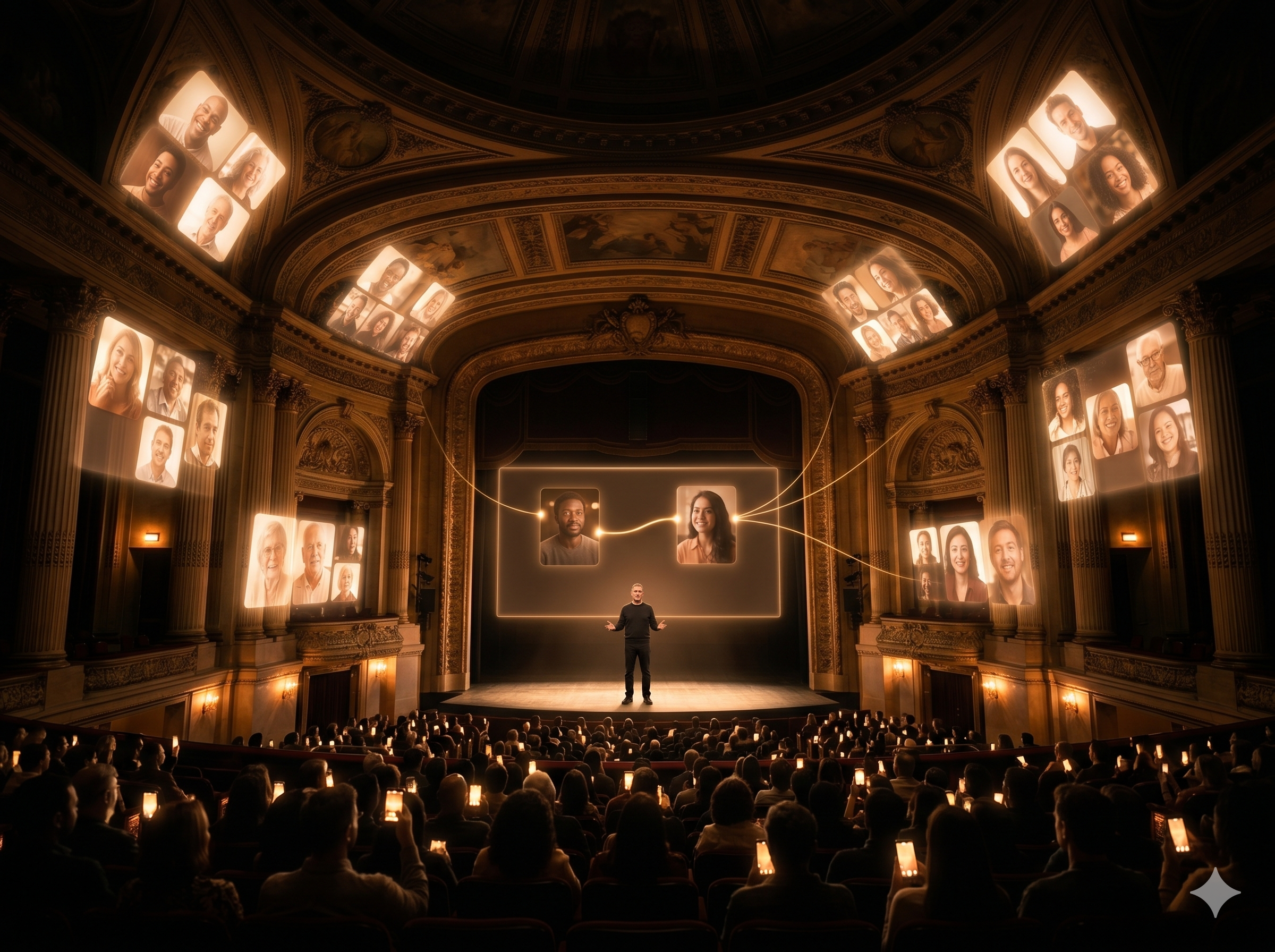
Posts appear on the screens in real time. He reads one out loud. Recognition moves through the audience like a current. Phones come up. Someone in the third row connects to something posted in the back of the room. The connection thread forms on the big screen where the audience can see it: two strangers, suddenly inside the same problem, solving it together in public, in real time.
This is social networking. Not the way you do it alone on your phone. The way it was always supposed to work: visible, alive, in a room where everyone can feel it forming.
Scene II
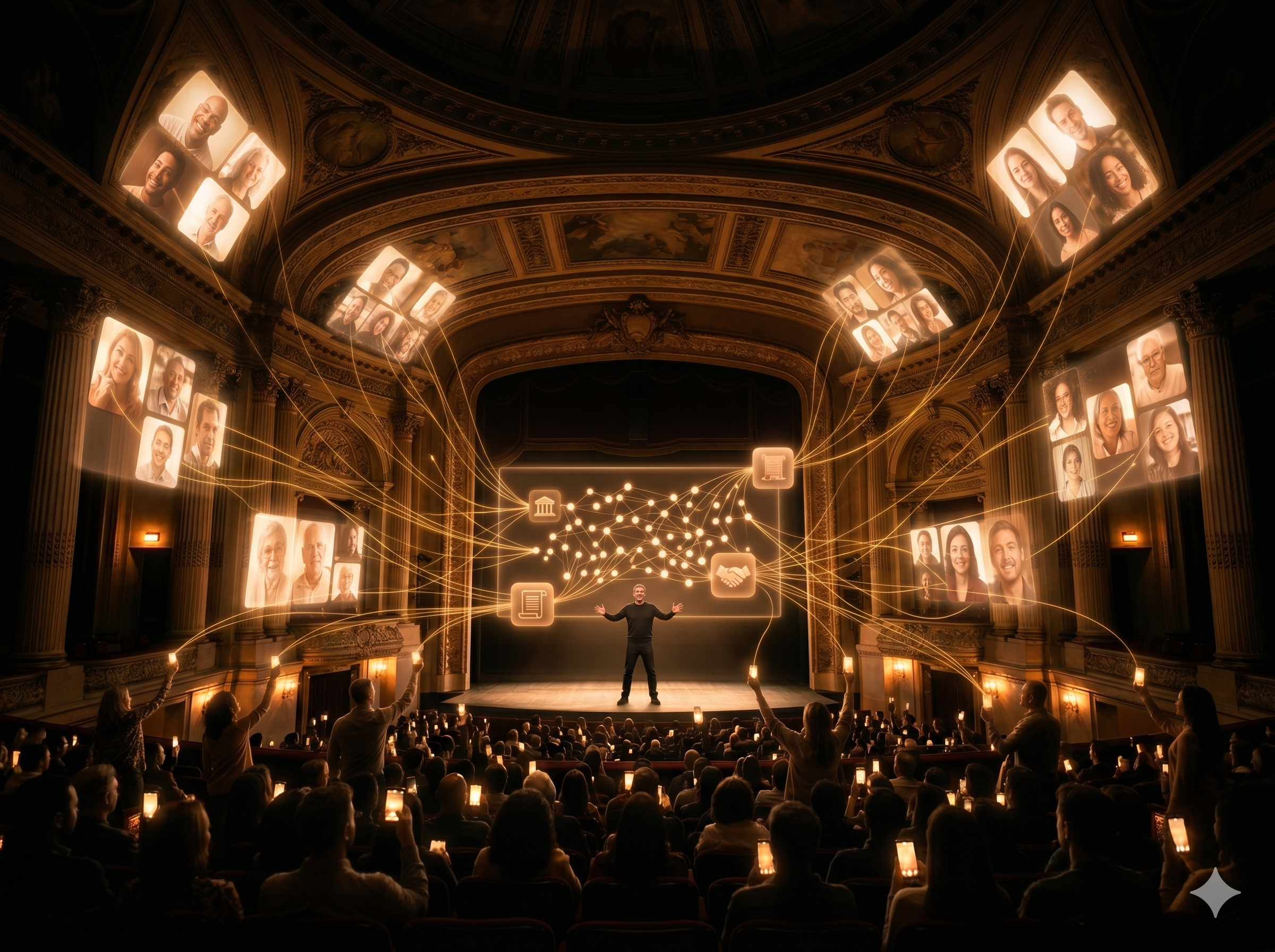
And then: a building becomes available. A legal mind surfaces. A philanthropist who has been waiting to be asked raises their hand. Someone flags a connection to the legislator whose committee makes this real. Direct support begins to flow toward the campus mental health resources that will still be there long after the lights go down.
Kickstarter puts a campaign on your screen. GoFundMe puts an ask in your feed. This puts the room to work on the problem while the performer is still on stage. The crowd isn't donating. It's deciding.
Scene III
And through all of it, the performer is still on stage. Still improvising. Reading the room, reading the feeds, making real-time decisions about what this particular group of people needs right now. Going deeper into his story when the room is ready. Pulling back into humor when it needs to breathe. Bringing someone in from Instagram Live when the moment calls for it. Conducting an orchestra that did not know it was one until he walked out.
This is not a performance delivered at an audience. It is a live conversation with one. Anyone in the room can be called to the stage. Voices come back from the seats. The room is never just watching. It is always, also, responding.
One man's life story.
The room's dormant resources.
The world's real-time attention.
All of it, activated, in one night.
It is community being capable of it.
In front of you.
Right now.
I am here to live my story with you." From the opening monologue
The room holds whoever showed up. The broadcast holds everyone else.
Every show streams live. Not as a recording. Not as an archive. As it happens, in real time, to anyone watching from anywhere.
The student who couldn't get a ticket watches from her dorm and tags her professor. The philanthropist in Sacramento stumbles across the stream and sees the vacant building being offered in the room. The journalist in Chicago watches the crowd decide something together and starts writing before the lights come up. The influencer with two million followers shares a clip at midnight. By morning, the network is larger than anyone in the room could have made it alone.
This is the exponential layer. The room is the ignition. The broadcast is the explosion.
People watching live can chip in, add their offer to the network, tag someone who needs to be in the thread. The show runs a live presence beyond the theater walls, in parallel to everything happening on stage, so that the philanthropist who never sets foot in New Jersey still becomes part of what gets built there.
Every seat in the room is a seat. Every screen beyond it is a door.
The show does not end at the walls. It never did.
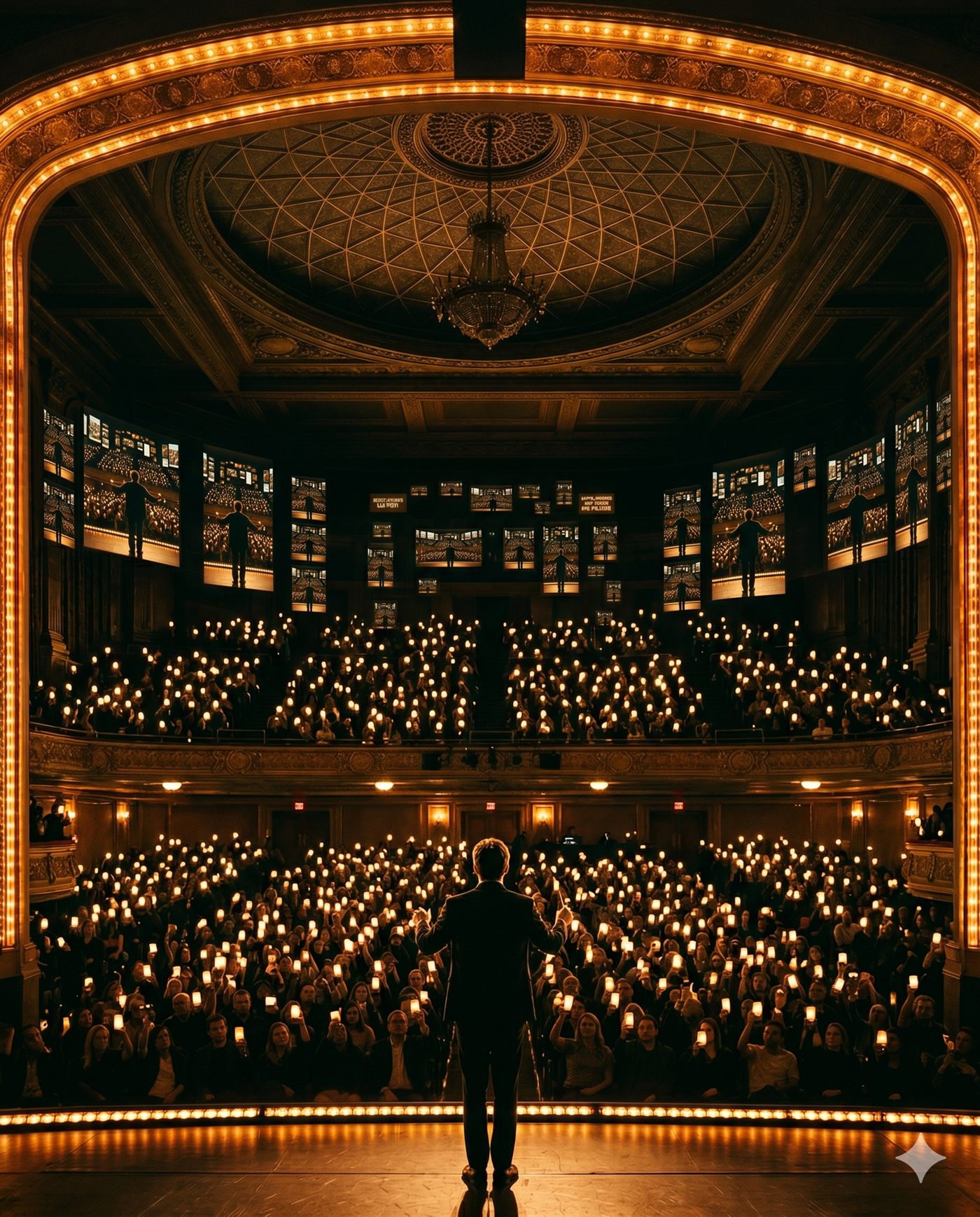
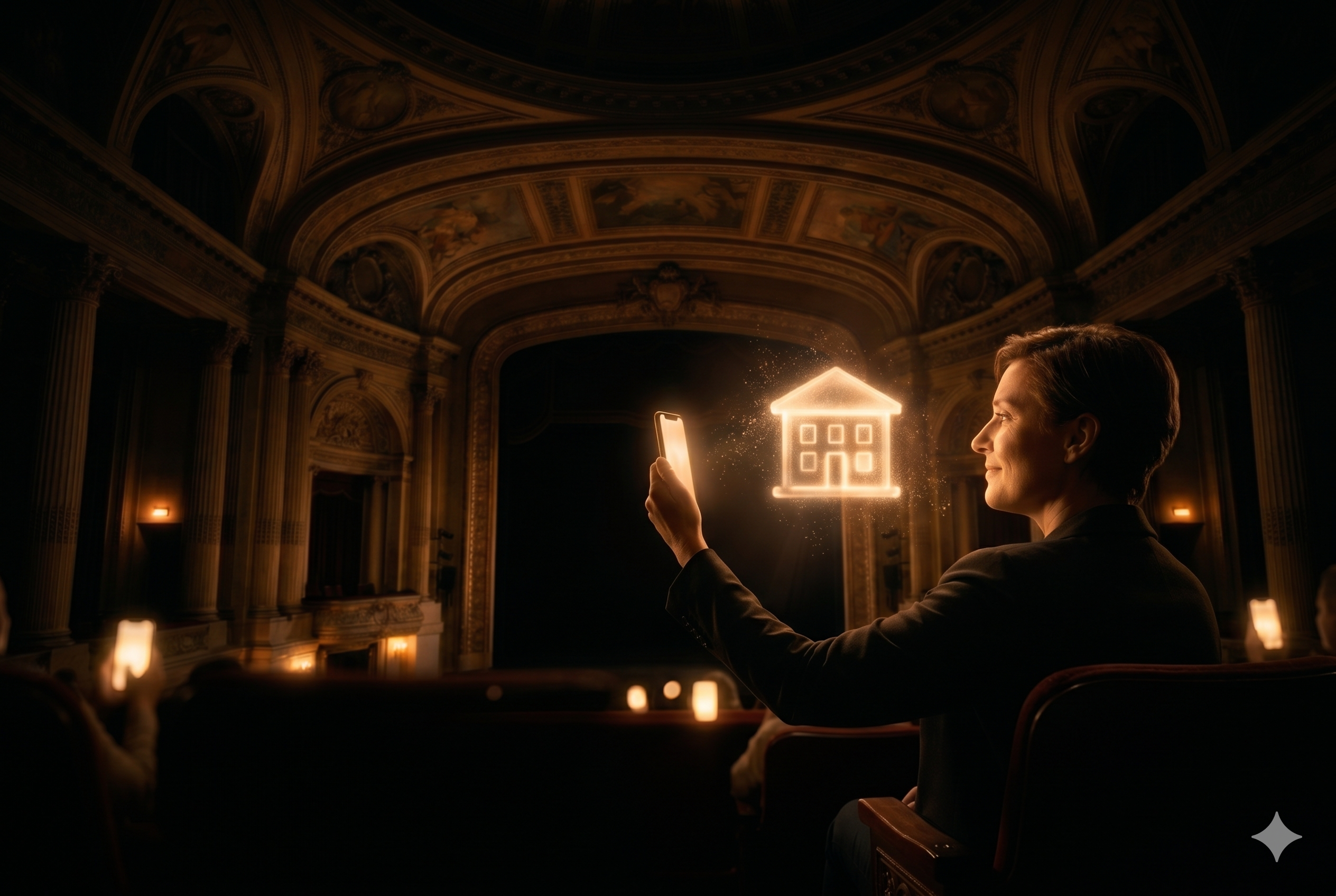
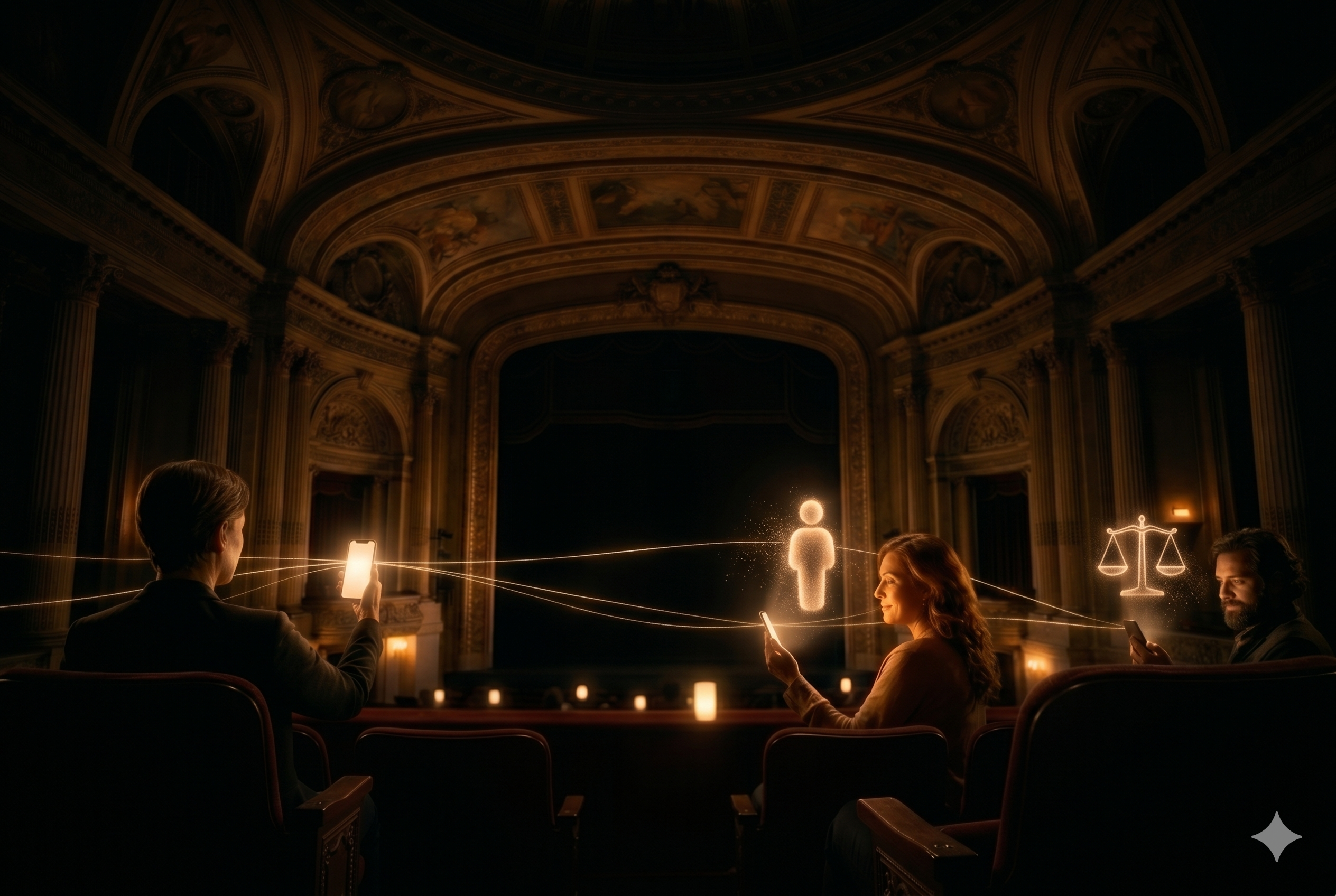
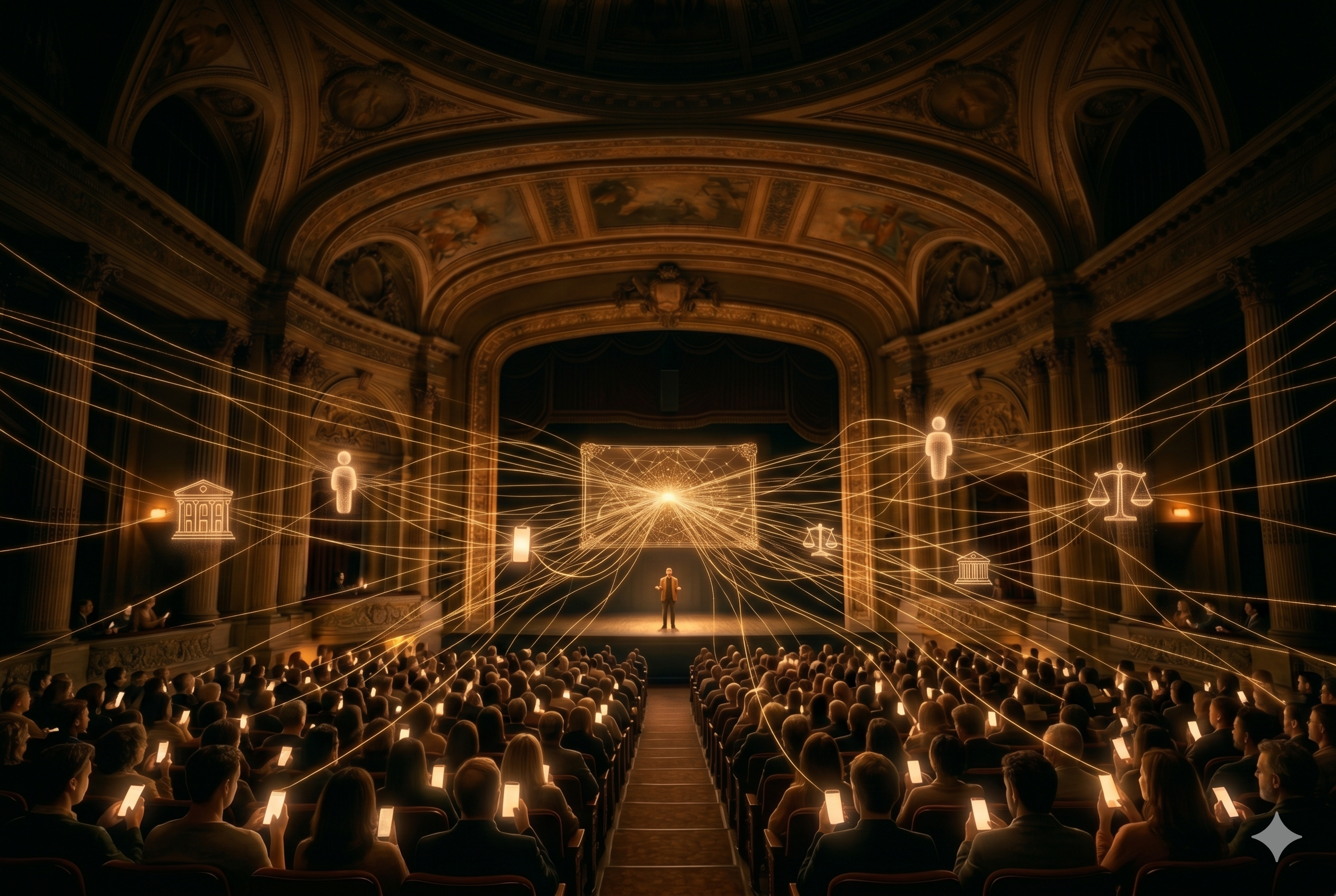
Theater as portal. Audience as the medicine.
Every show arrives on a campus with a question already on the table. Not a theme. Not a topic. A real question: what does this campus, this town, this county, this state need most right now to build the infrastructure for mental health reformation? And the show is the room going to work on it.
A vacant building. A legal mind. A press contact. A philanthropist. A connection to the legislator whose committee makes this real. Every show surfaces things like these, connects them live on the big screen, and puts them to work. Strangers becoming radical philanthropists in front of an audience that's also the cast.
This is collective intelligence and collective generosity: the most adaptive, evolutionary mechanism humans have ever found for solving hard problems. Faster than any agency alone. Smarter than any committee alone. More generous than any institution alone. The room outperforms the system, every time, because the room is the system the way it was always supposed to work.
Every offer, every idea, every connection made tonight is logged into DePsy: the platform that gives every contribution a permanent record, attributes it to the person who gave it, and lets the generosity compound across every show that follows. What you offer tonight does not disappear when the lights come up. It becomes part of the infrastructure. Provenance, not competition. An economy built from what's freely given, flowing value and impact between everyone creating it.
The screens carry the rest of the moviement: voices, documentary footage, testimony pouring in from beyond the building. The network is the show, looking back at itself in real time.
And every show feeds the next. The vacant building offered tonight becomes the example cited next month. The legal draft started here gets refined three states over. The work compounds the way mycelium feeds a forest, quietly, structurally, even when no one sees the seam.
Temple underneath. By design
The form is a show. The structure is a ceremony.
Kinetic. Alive. Fun. Never churchy. Underneath, something older. Invocation. Witness. Offering. Communion. Sending. The same shape every ceremony has ever taken when humans needed to gather attention into a vessel that could carry something sacred.
Disguised on purpose. Students don't need another church; they need a place that feels like a concert and works like a ceremony. Burning Man uses the same trick. Festival on the outside. Temple on the inside. The surface never tips its hand.
The shape is ancient. The technology is 2026. The result is something humans have always needed and rarely gotten: a room that actually works.
Taste of Wonderland
A structured community process. Faculty, students, families, friends, and local entrepreneurs, brought together as part of every campus residency. More details coming.
Section in developmentUnbreakable Spirit
The DocuseriesEvery campus is a chapter. Every residency, a new episode in an unfolding documentary about what happens when a room decides to change things. The show is being filmed as it grows.
Section in development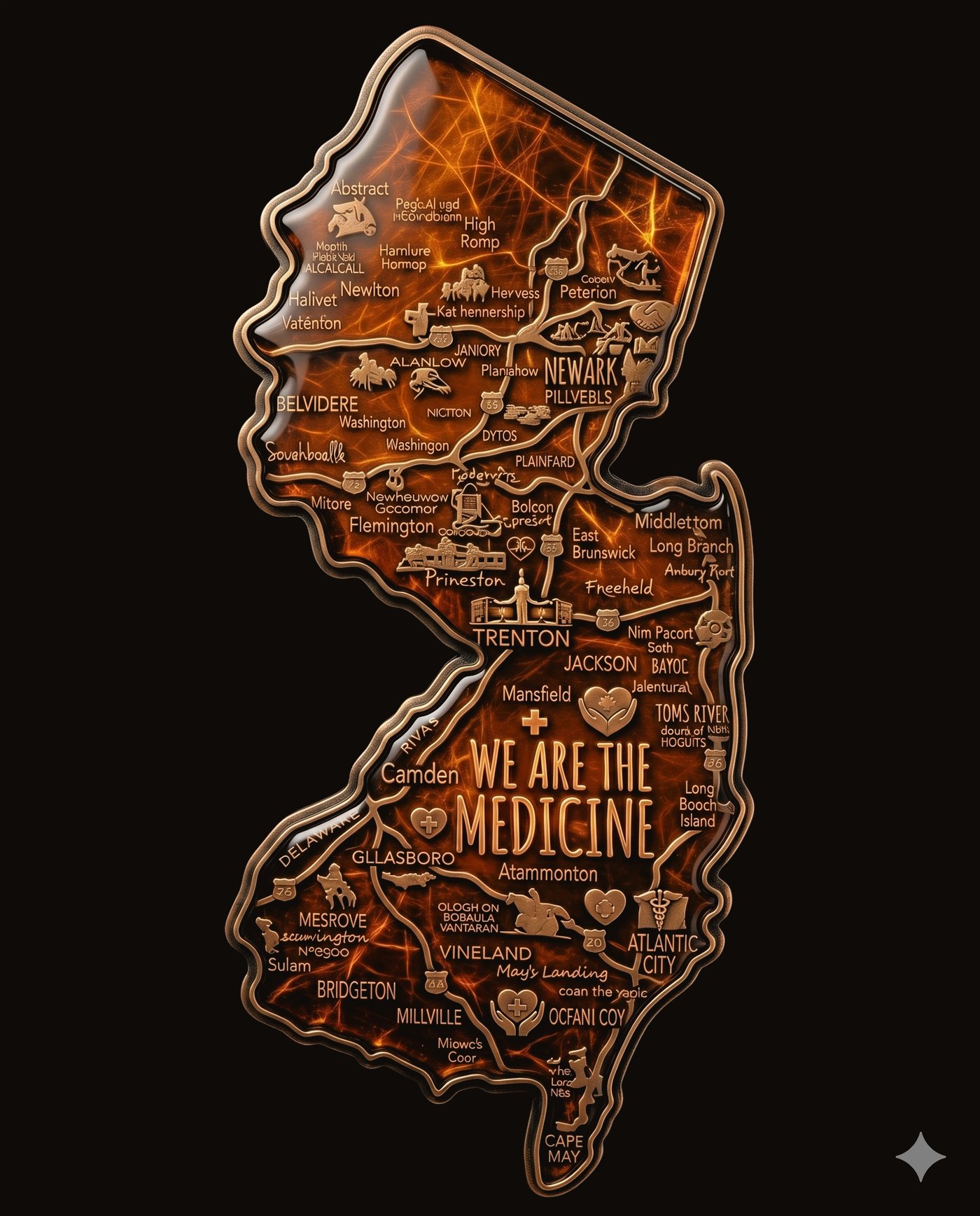
Adam Yauch On Why He Helped Create The Free Tibet Music Festival
A grassroots start, campus by campus.
Brookdale Community College is not just the first campus. It is the home base: where the show is built, refined, and incubated. Where we return between tours. Where the residency model is proven and the template is set for every campus that follows. For a campus that wants not just to host but to co-create, this is what that looks like.
Our dream is to begin at Brookdale Community College, in central New Jersey, in front of students who already speak fluent music, story, and screen, but rarely get invited to use those languages as instruments of healing.
In the 1990s, the Free Tibet Festivals proved something quiet and powerful: culture moves faster than policy. Students, artists, organizers (a network nobody centralized) reshaped how the world saw an entire region. Not through institutions. Through music, story, identity, and participation.
We're walking that same lineage into the defining mental health crisis of our generation. The first chapter will be one campus. The next will be another. Then another. Each campus is not a branch. It's a chapter in an unfolding story.
If you run a campus, or care about one, this is where the conversation starts.
Every show leaves something behind.
The performance is the spark. The studio is what the spark sets to permanent fire. Two things stay on every campus we play:
Campus mental health resources
Peer support networks, crisis response, the people and programs already doing the work, funded directly by the audience that just lived the show together.
A Storylivingry Studio on that campus
A working studio where students turn what they've lived through into film, performance, and shared media. Not therapy. A place where what gets called illness gets met as creative signal, sensitivity, and gift.
What stays on campus is supported by a portion of ticket sales, merchandise, and docuseries revenue, divided across every campus in the tour. Not fully funded overnight. Supported, and growing with every show.
But the show doesn't only generate money. It generates the connections, expertise, and resources that no institution could buy: the legal mind who drafts the bylaw, the press contact who covers the story, the philanthropist who was waiting to be invited. The room is the funding mechanism. The money follows the room.
Every show is a funraiser for what stays after the lights go down. The giving is the point. The show earns what the campus keeps.
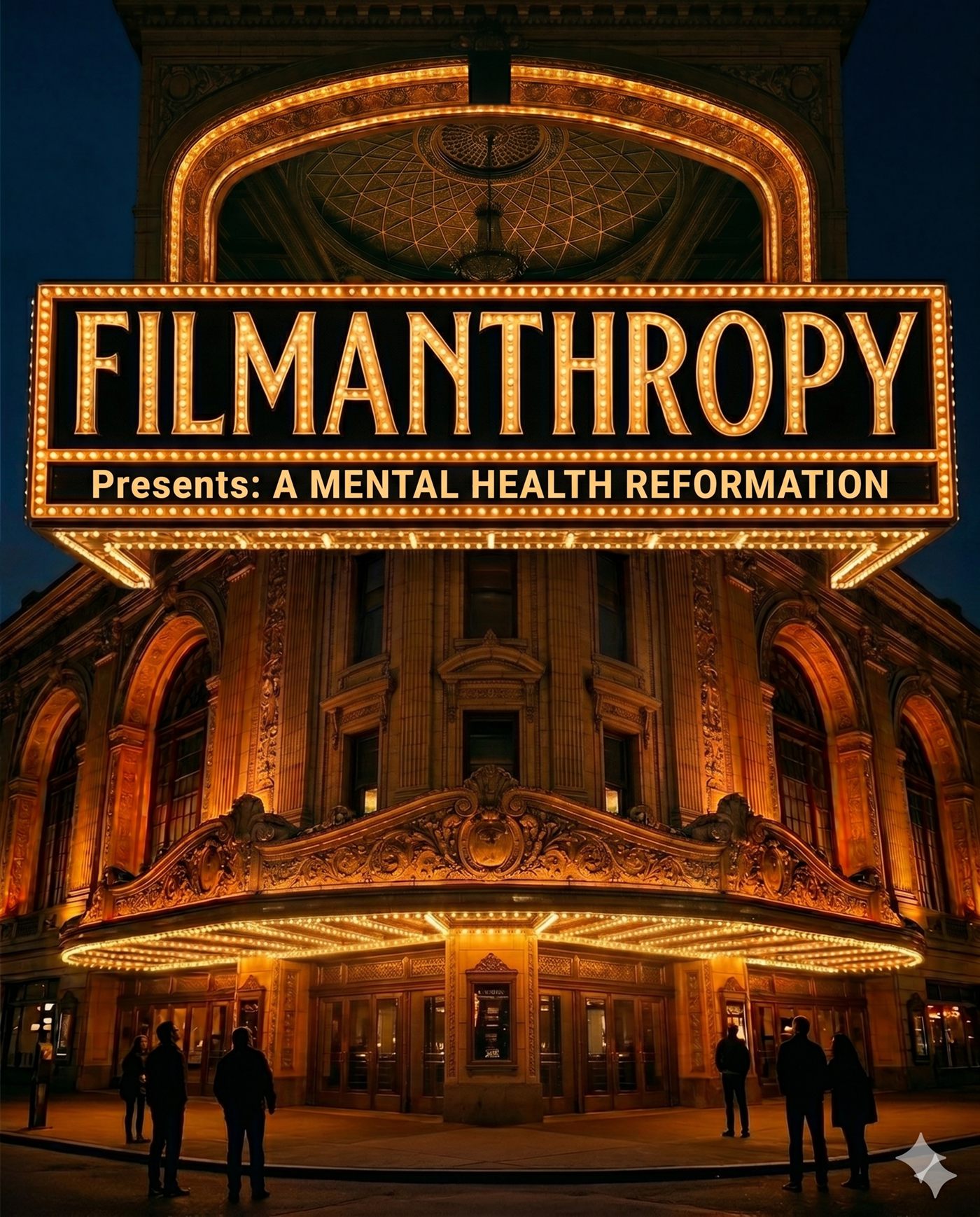
One room inside a larger one.
The show is one room inside a larger movement, a Civil Rights Moviement for the Soul unfolding across stage, screen, story, and technology. This is the part you can walk into. The part where something gets built.